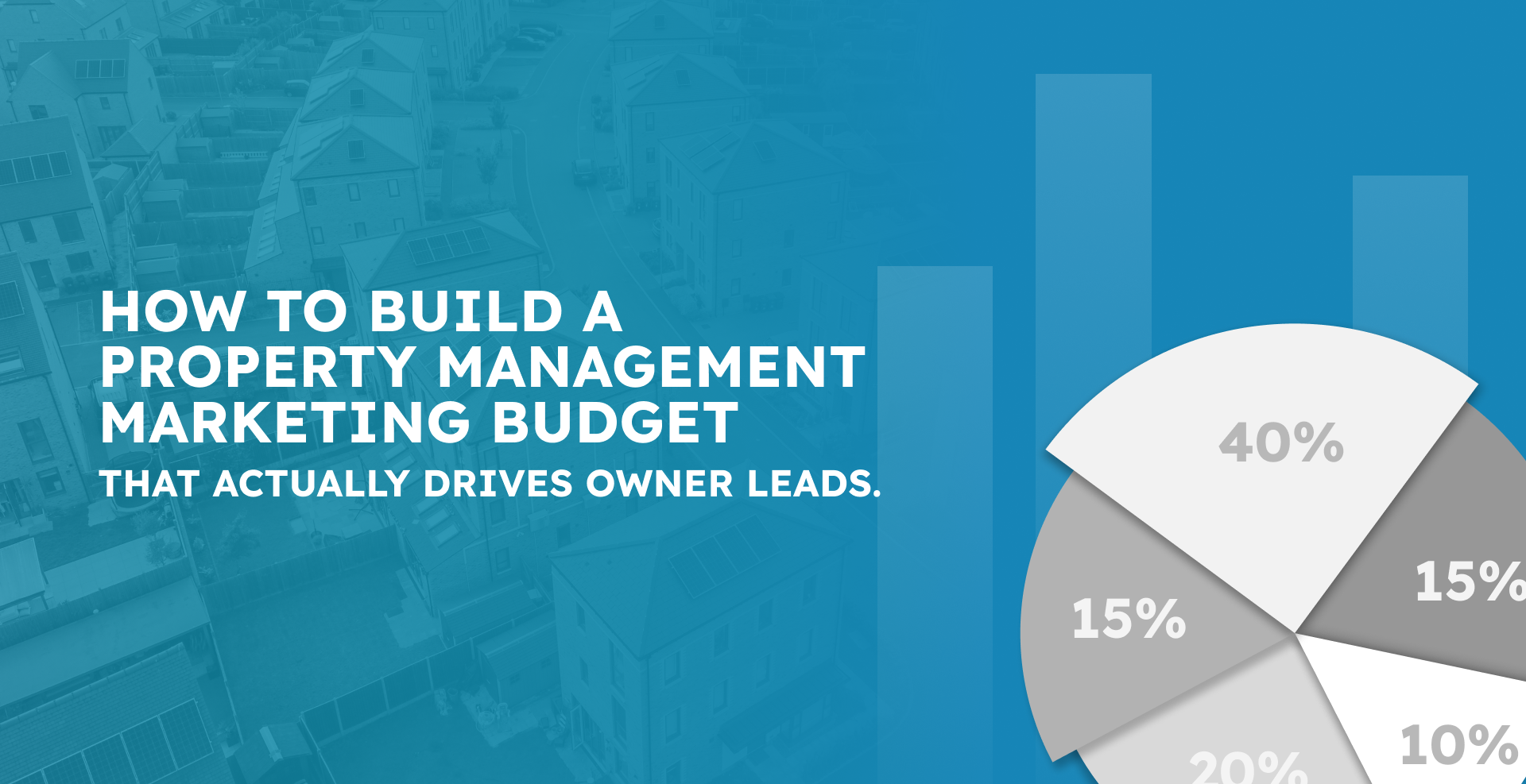

A high-performing property management marketing budget typically allocates 7 to 10 percent of projected management revenue across SEO, paid advertising, website optimization, reputation management, and automation. The focus should be on channels that generate qualified owner leads, not just traffic.
This guide explains how much to spend, where to spend it, and how to measure ROI, whether you manage 50 doors or more than 1,000.
Why Most Property Management Marketing Budgets Fail
Many property management companies do not have a true marketing budget. Instead, they operate with disconnected marketing expenses that are not tied to a clear growth strategy. Common examples include:
A website built once and never optimized
Inconsistent Google Ads spend with no defined funnel
SEO content created without conversion tracking
No clear KPIs tied to owner acquisition
When marketing decisions are made in isolation, results become unpredictable. One month may bring a few owner leads while the next produces none. This inconsistency often leads property managers to cut spend or jump between tactics rather than fixing the underlying strategy.
The core issue is that most budgets are channel-first instead of outcome-first. Money is allocated based on what sounds useful rather than what directly supports owner acquisition.
Your marketing budget must start with outcomes, not channels. Every dollar should support a clear path from owner awareness to signed management agreement.
For a complete framework, see the full Property Management Marketing Strategy Guide.
How Much Should a Property Management Company Spend on Marketing?
Industry Benchmark
Most service-based businesses, including property management, should budget:
7 to 10 percent of gross revenue for steady growth
10 to 15 percent for aggressive expansion or new markets
The U.S. Small Business Administration notes that businesses targeting growth often invest closer to 8 to 10 percent of revenue in marketing.
For property management companies, this spend is not optional. Owners are actively comparing firms online, reading reviews, and evaluating websites long before they ever submit a contact form.
Revenue-Based Example
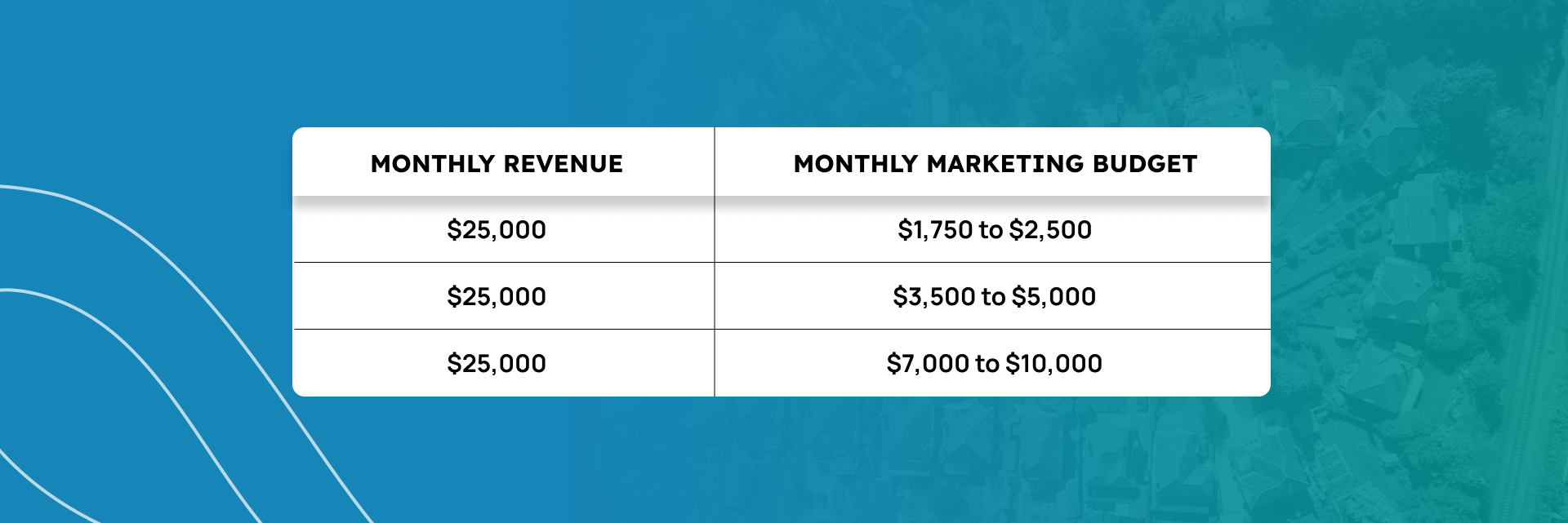
These ranges allow for balanced investment across foundational channels rather than relying on a single tactic like paid ads or referrals.
Budget by Channel: What Actually Drives Owner Leads
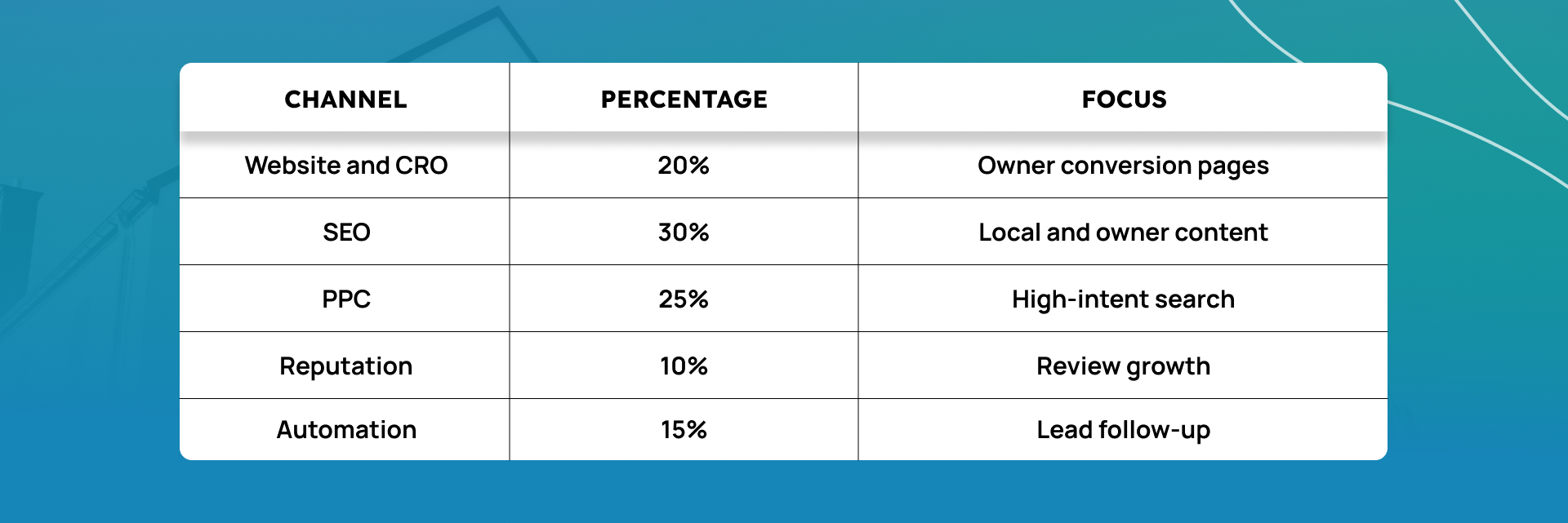
Your website is the most important asset in your entire marketing budget. Every dollar spent on SEO, PPC, reputation management, and content ultimately sends traffic back to your site. If the website is not built to convert property owners, marketing spend is wasted.
A high-performing property management website must:
Clearly explain why an owner should choose your company
Communicate pricing value and differentiation quickly
Guide owners toward a consultation or proposal request
Capture and track leads across every channel
Many property management websites are designed to look professional but not to convert. They focus heavily on tenant information while burying owner messaging or calls to action.
This is why website optimization should be treated as a core growth investment, not a one-time design project.
Property management companies that prioritize conversion-focused websites consistently see higher owner lead quality and lower cost per acquisition across all channels.
Learn how a strategy-first website supports every part of the funnel in our Property Management Digital Marketing Services, where website structure, SEO, paid traffic, and automation are built to work together.
If your site does not actively convert owner traffic into qualified leads, no marketing budget will perform as expected.
SEO and Content Marketing (25 to 35 percent)
SEO delivers one of the lowest long-term costs per owner lead for property management companies. Unlike paid ads, SEO compounds over time and continues producing leads even when monthly spend remains flat.
Budget allocation should include:
Local SEO for “property management near me” searches
Owner-focused content such as pricing, switching managers, and ROI
Ongoing optimization and internal linking
Effective SEO for property management is not about publishing generic blog posts. It requires content that directly answers owner questions and aligns with search intent.
Google emphasizes helpful, people-first content as a core ranking factor.
When done correctly, SEO becomes the backbone of owner acquisition and reduces reliance on paid advertising over time.
PPC and Paid Acquisition (20 to 30 percent)
Paid advertising delivers faster results than SEO but requires discipline to remain profitable. PPC performs best when supported by strong landing pages, clear messaging, and conversion tracking.
Typical focus areas:
Google Search Ads
High-intent owner keywords
Retargeting campaigns
CRM and funnel integration
Paid ads should not be used to compensate for a weak website or unclear positioning. When combined with strong SEO and conversion optimization, PPC becomes a powerful accelerator rather than a financial drain.
Reputation and Reviews (5 to 10 percent)
Property owners rely heavily on trust signals when comparing management companies.
Budget covers:
Review generation automation
Review monitoring and responses
Google Business Profile optimization
BrightLocal reports that 87 percent of consumers read online reviews for local service businesses. A steady flow of recent, positive reviews improves both conversion rates and local search visibility, making reputation management a multiplier for every other channel.
Automation, CRM, and Lead Nurturing (10 to 15 percent)
Marketing does not stop once a lead fills out a form. Many owner leads are lost simply because follow-up is slow, inconsistent, or manual.
Budget should include:
Email and SMS follow-up
Lead scoring and routing
CRM and marketing automation
Automation ensures that every owner inquiry receives immediate, relevant follow-up while your team focuses on closing qualified opportunities.
This category is especially important for companies managing growth, where manual processes quickly break down.
Sample 90-Day Property Management Marketing Budget
Goal: Increase owner leads within one quarter
What KPIs Should Your Budget Be Tied To?
Avoid vanity metrics such as impressions or raw traffic. Your marketing budget should be tied to owner acquisition outcomes, including:
Lead-to-client conversion rate
Cost per signed management agreement
Marketing ROI by channel
Tracking these KPIs allows you to reallocate budget toward channels that consistently produce signed contracts rather than just activity.
Common Budgeting Mistakes to Avoid
Spending on ads before fixing website conversion issues
Cutting SEO because results are not immediate
Tracking traffic instead of signed contracts
Using disconnected tools that do not share data
A marketing budget without integration leads to wasted spend and unclear attribution.
Frequently Asked Questions
How much should a small property management company spend on marketing?
Most small firms should allocate 7 to 10 percent of monthly revenue, starting with SEO and website optimization before increasing ad spend.
Is SEO or PPC better for property management?
SEO provides long-term, compounding returns, while PPC delivers faster short-term results. The strongest strategies combine both.
What is the biggest marketing budget mistake property managers make?
Spending money without a funnel that converts owner traffic into signed management agreements.
Next Step: Turn Budget Into Predictable Growth
A marketing budget only works when it supports a complete system. When website, SEO, paid traffic, reputation, and automation are aligned, marketing becomes predictable instead of stressful.
Explore the full Property Management Marketing Strategy to see how marketing spend turns into long-term contracts.