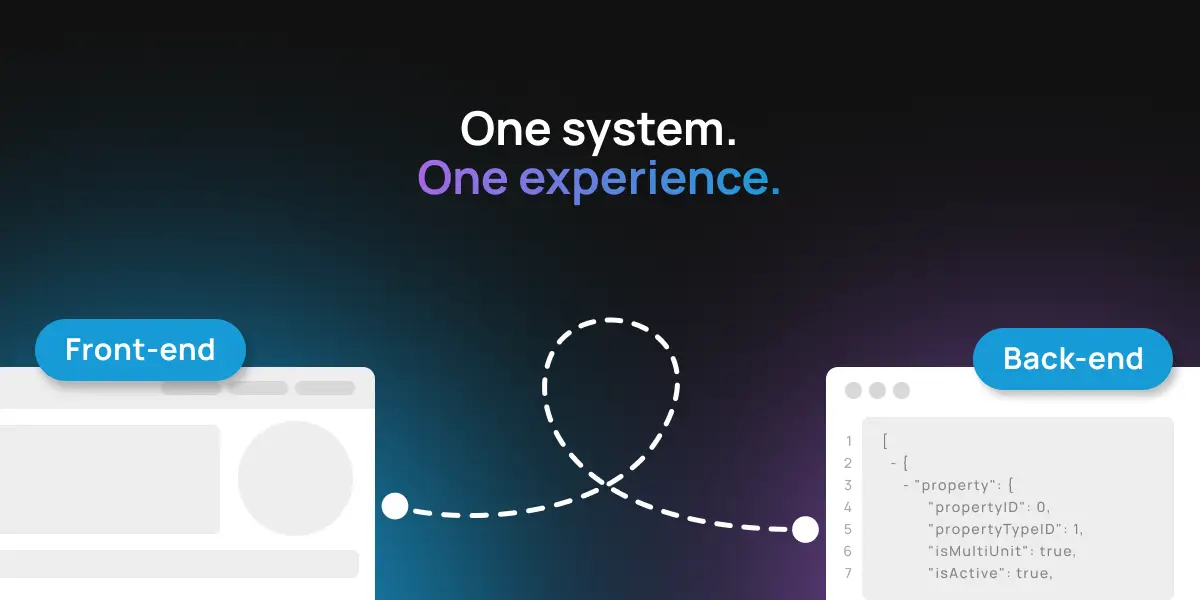

Most property management companies treat their website and their software as two separate investments.
One is for marketing.
One is for operations.
But owners don’t experience them separately. They experience one company. And when your front-end promise doesn’t match your back-end reality, they feel it immediately.
That disconnect creates hesitation. And hesitation costs you conversions, pricing power, and long-term growth. If you want to scale with confidence, your website and your property management software must work together as one integrated system.
The Invisible Break Between Marketing and Operations
A typical growth path looks like this:
You invest in a professional website to improve visibility, rank in search, and generate owner leads. Separately, you implement a property management platform to run accounting, maintenance, reporting, and communication.
Both platforms may be excellent.But if they weren’t built to complement each other strategically, they operate in parallel — not in alignment.
So your website says:
“Streamlined onboarding.”
“Transparent communication.”
“Advanced reporting.”
But the operational experience behind the scenes may feel manual, fragmented, or inconsistent. Owners notice that gap.
They research your company.
They review your website.
They submit a form.
They speak with your team.
They sign an agreement.
Then they log into an owner portal.
If that journey feels cohesive, trust increases. If it feels disjointed, doubt creeps in. And in property management, doubt is expensive.
Your Website Is More Than a Lead Generator
Many firms think of their website purely as a traffic source. But for property managers, your website is credibility insurance. Owners are not just comparing services — they’re evaluating risk.
They want to know:
Is this company organized?
Do they have real systems?
Will my asset be protected?
Are they worth their management fee?
A high-performing property management website — like those built by PMW — is designed to do more than look good. It communicates structure. It explains process. It clarifies expectations. But for that messaging to feel authentic, it must reflect your actual operational systems — the workflows powered by your software. That’s where alignment becomes powerful.
The Cost of Attracting the Wrong Owners
A common frustration among property managers isn’t lack of inquiries. It’s attracting the wrong inquiries.
Too many price shoppers.
Too many DIY landlords.
Too many conversations that go nowhere.
This often happens when your website is optimized for volume, not qualification. When your front-end isn’t aligned with your back-end workflows, your intake process collects minimal information and sends it into a completely separate operational environment. There’s no filtering mechanism built around how you actually run your business.
But when your website strategy is intentionally aligned with your operational engine, you can:
Pre-frame expectations.
Clarify your management philosophy.
Capture information that mirrors onboarding requirements.
Segment prospects based on portfolio size or goals.
Instead of chasing volume, you attract alignment.
Pricing Power Comes From Visible Infrastructure
Fee resistance rarely happens because your price is too high. It happens because your value isn’t clearly demonstrated.
If your website sounds like every other “full-service property management” company, you become interchangeable. And interchangeable companies compete on price.
But when your online presence clearly outlines:
Structured onboarding processes
Maintenance workflows
Financial reporting cadence
Owner communication standards
Portal transparency
—you shift the conversation. Instead of selling “management,” you’re selling infrastructure.
Modern platforms, like Rentvine, provide robust operational systems — from owner portals to financial transparency tools. When your website clearly communicates those capabilities, pricing becomes easier to defend. Owners aren’t paying for promises. They’re paying for systems.
From Search to Signing: One Continuous Experience
The owner journey doesn’t reset when they sign. It continues. It begins with a Google search and often lands on your website — ideally a high-performing, SEO-optimized platform like those built by PMW.
From there, it flows into:
Inquiry submission
Consultation
Agreement
Onboarding
Owner portal access
If the portal experience feels disconnected from the expectations set by your website, credibility weakens.
But when:
Lead forms reflect real onboarding criteria
Website messaging mirrors operational workflows
Owner expectations match portal functionality
Reporting dashboards deliver what was described
The transition feels seamless. And seamless experiences build confidence.
Integration Creates Leverage
Growth isn’t just about generating more traffic. It’s about eliminating friction. When your website and property management software operate independently, you create:
Duplicate data entry
Inconsistent messaging
Onboarding confusion
Internal inefficiencies
Increased skepticism from owners
When they’re aligned, you create:
Cleaner handoffs from marketing to operations
Better-fit owner conversations
Reduced administrative redundancy
Stronger fee defense
Greater long-term scalability
The partnership between a conversion-focused website platform like PMW and a powerful operational engine like Rentvine creates continuity from first click to first owner statement.
That continuity is what allows growth to compound.
The Competitive Advantage Most Firms Overlook
Nearly every property management company claims to be:
Professional
Experienced
Full-service
Transparent
Very few demonstrate real systems clearly. Operational clarity has become a differentiator. When your marketing and operations are aligned, you can confidently show:
How maintenance flows from request to resolution
How financial reporting is structured
How communication is tracked
How onboarding is standardized
Your website stops sounding generic. It starts sounding structured. And structure builds trust.
Final Thought
Your website shapes perception. Your software delivers reality. If they operate separately, you introduce doubt at the most critical moment in the owner decision process.
But when your website strategy is intentionally aligned with your operational platform you create one cohesive experience from search to signing.
That alignment doesn’t just make you look professional. It makes you feel dependable at every touchpoint. And in property management, dependability is the foundation of growth.
FAQs
Why should my property management website and software work together?
Because owners experience your company as one brand. If your website messaging and operational systems aren’t aligned, it creates friction, confusion, and reduced trust during onboarding.
How does integrating my website with property management software improve lead quality?
An aligned website can pre-qualify owners using criteria that match your real workflows. When that data flows directly into your operational system, you reduce poor-fit prospects and improve conversion rates.
Can integration help justify my management fees?
Yes. When your website clearly communicates structured systems — and your software platform (such as Rentvine) visibly supports those systems — owners see tangible value and are less likely to focus solely on price.
What happens if my front-end and back-end systems don’t match?
You may experience duplicated data entry, inconsistent messaging, onboarding confusion, and lost deals due to misaligned expectations.
How do PMW and Rentvine complement each other?
PMW builds high-performing, SEO-driven property management websites designed around real operational processes. Rentvine powers backend workflows — including owner portals, reporting, and maintenance tracking — ensuring the experience matches the promise.