

Why most local SEO strategies fail property managers
Most property management companies don’t have a traffic problem—they have a lead quality problem.
Traditional local SEO advice focuses on visibility, rankings, and clicks. But if your traffic is coming from tenants instead of property owners, your SEO isn’t driving growth—it’s creating noise.
What we consistently see across property managers is this:
Ranking for “apartments for rent” instead of “property management”
Generic location pages that don’t convert
No strategy for expanding into multiple markets
Websites that attract traffic but fail to generate leads
Local SEO only works if it’s built around owner intent and conversion.
What is local SEO for property managers?
Local SEO for property managers is the process of ranking in specific geographic markets for high-intent owner searches like:
“property management company in [city]”
“rental property manager near me”
“how much does property management cost in [city]”
The goal isn’t just visibility—it’s capturing demand from property owners actively looking for help.
Why ranking in multiple markets changes your growth ceiling
If you only rank in one city, your growth is capped by that market.
But when you build a scalable local SEO strategy, you can:
Expand into surrounding cities without opening new offices
Capture owner demand across multiple zip codes
This is where most property managers hit a wall—they don’t know how to scale beyond a single location without breaking their SEO.
FAQ: Why am I getting traffic but no owner leads?
Because your SEO is targeting tenants, not owners. High traffic keywords often bring the wrong audience. Ranking for the right intent matters more than ranking higher.
How to build location pages that actually rank and convert
Most location pages fail because they’re thin, duplicated, and built for search engines—not users.
Google doesn’t reward copy-paste pages. And property owners won’t convert on generic content.
What high-performing location pages include
City-specific messaging (not swapped-out names)
Local market insights (rent trends, demand, challenges)
Clear service differentiation
Trust signals (reviews, results, case studies)
Strong conversion paths (forms, CTAs, rental analysis tools)
In our experience, the difference between a page that ranks and one that generates leads is depth + intent alignment.
How many location pages do you actually need?
Not hundreds—just the right ones.
Start with:
Your core market
Surrounding high-demand cities
Areas where you actively want to grow
Then expand strategically based on performance data.
FAQ: can I duplicate pages for different cities?
No. Duplicate content will limit rankings and reduce trust. Each page needs to be uniquely valuable to both Google and property owners.
How to optimize your Google Business profile for owner leads
Your Google Business profile is one of the most underutilized assets in property management marketing.
Most companies treat it like a listing. High-growth companies treat it like a lead generation channel.
What actually moves rankings in Google Maps
Consistent reviews (and responses)
Accurate service categories
Localized content and updates
High-quality photos
Engagement signals (clicks, calls, directions)
But here’s the real difference:
Top-performing profiles are optimized for owners—not tenants.
That means your messaging, services, and content should clearly speak to property owners.
FAQ: Do reviews impact local SEO?
Yes. Reviews influence both rankings and conversion. But quality matters—owner-focused reviews are far more valuable than tenant feedback.
How content drives local SEO (and why most PMs get it wrong)
Content isn’t just for blogging—it’s how you expand your visibility across markets.
But most property managers create content that attracts tenants or answers low-intent questions.
That doesn’t drive growth.
What content actually generates owner leads
“How much does property management cost in [city]”
“Should I rent or sell my home in [city]?”
“Best property management companies in [city]”
“Rental market trends in [city]”
These topics align directly with owner decision-making.
When paired with strong SEO and conversion-focused websites, this content becomes a consistent lead driver.
FAQ: How often should I publish content?
Consistency matters more than volume. Focus on high-intent topics that align with owner searches—not just publishing for the sake of it.
Why SEO without conversion is wasted spend
This is where most marketing strategies break.
You can rank in every market—but if your website doesn’t convert, you’re just increasing bounce rates.
What we see across underperforming companies:
Slow, outdated websites
No clear value proposition
Weak or missing calls to action
No lead capture tools
Traffic without conversion is not growth—it’s missed opportunity.
This is why high-performing property managers don’t treat SEO, websites, and ads as separate tactics—they build a connected system.
Where operations meets growth
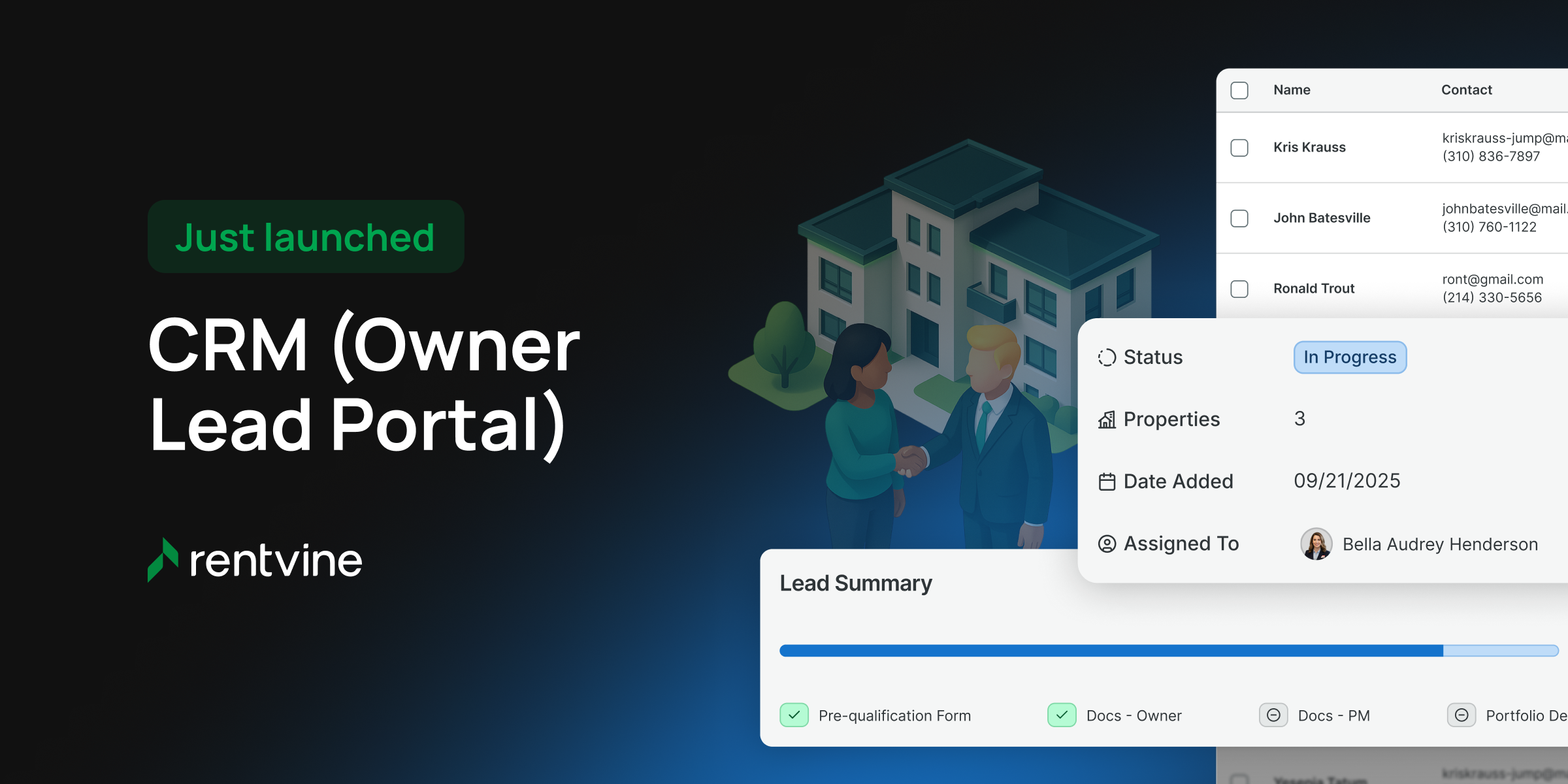
As your local SEO expands and lead volume increases, your ability to capture and manage those leads becomes critical.
That’s where having the right operational platform matters.
If you’re scaling your marketing but your systems can’t keep up, you’re leaving deals on the table.
👉 See how Rentvine helps property managers streamline operations and scale with confidence
FAQ: How do I know if my website is costing me leads?
If you’re getting traffic but not consistent inquiries, your conversion system is the bottleneck—not your SEO.
What it takes to rank in every market
Ranking across multiple markets isn’t about tricks—it’s about building the right system.
That system includes:
Strategic location pages
Owner-focused keyword targeting
Optimized Google Business profiles
High-intent content
A conversion-focused website
Most importantly, it requires alignment between visibility and conversion.
Because ranking is only valuable if it turns into signed management agreements.
Frequently asked questions about local SEO for property managers
How long does local SEO take to work?
Most property managers start seeing movement in 3–6 months, with stronger lead flow building over time as authority increases.
Can I rank in markets where I don’t have an office?
Yes—if your content, location pages, and SEO strategy are built correctly. Physical location is no longer a hard requirement.
What’s more important: SEO or paid ads?
Both. SEO builds long-term demand, while paid ads accelerate results. The strongest strategies combine both.
Should I hire a general marketing agency?
In most cases, no. Property management marketing requires a specialized approach focused on owner lead generation—not generic local business tactics.
Stop chasing rankings. Start generating leads.
Local SEO isn’t about being visible everywhere—it’s about being visible where it matters and converting that visibility into growth.
If your current strategy isn’t producing consistent owner leads, the issue isn’t effort—it’s structure.
You don’t need more traffic. You need a system that turns traffic into business.
Get a free PMW marketing audit and see exactly where your SEO and website are costing you leads